
On the Turkish table, soup is not just a starter; it is a way of sharing, offering hospitality and connecting with the past. The articles below draw on academic studies and encyclopedia entries, covering everything from the name of soup to its place at the table, and retell them in our own words. The source each section is based on is noted at its end; you can find all the sources in the Sources section at the bottom of the page.
On this page: Where does the name come from? · From Central Asia to Anatolia · Its place at the table · Soup varieties · Bowl and spoon · Which group are our soups in? · The “çorbacı” in the Janissary corps · Kasımpaşa and the sea · Scenes from old Istanbul · Soup at Deniz Lokantası
Where does the name come from?
The word “çorba” is Persian. Dictionaries trace it to the Persian şorba, which in turn is said to be made up of şûr, meaning “salty”, and âb/âbâ, elements carrying the sense of food and drink. In Arabic, the same dish was called “marak.”
The idioms in our language also show how much room soup takes up in everyday life: “çorba içmek” (“to drink soup”), “çorbaya dönmek” (“to turn into soup”), “çorbada tuzu bulunmak” (“to have one’s salt in the soup”)…
Source: Arlı & Gümüş, “Türk Mutfak Kültüründe Çorbalar” (Soups in Turkish Culinary Culture) (Gazi University).
From Central Asia to Anatolia
According to researchers, in the Middle Ages nomadic communities in Central Asia cooked watery, porridge-like dishes made from grains. Over time these dishes evolved into the soups of the Ottoman period and of today. After the Turks settled in Anatolia, they kept up the habit of eating soup, enriching it with new ingredients and regions.
Turkish cuisine, too, was not fed by a single source: the spicy flavors of Mesopotamia, the ingredients of Central Asia, the plants of Anatolia and the animal products of the Black Sea and the east all met at the same table.
Source: Arlı & Gümüş, “Türk Mutfak Kültüründe Çorbalar” (Soups in Turkish Culinary Culture).
Its place on the Turkish table
In Western cuisines, soup is mostly an appetizing starter. On the Turkish table, it both opens the menu and, when needed, serves as the main dish. According to the same study, a meal usually begins with soup; if one is still hungry, it continues with pilaf and hoşaf (a fruit compote).
Soup held an important place at the Ottoman table too. Sources report that everyone, from the humblest of the people to the sultan, had soup at dinner and even at breakfast.
Soup is also the dish of special occasions: varieties such as düğün çorbası (wedding soup), toyga and yayla soup are offered to guests at holidays and gatherings. Taking soup along when visiting the sick is also an old tradition. Starting soup with the prayer of the family elder or with the bismillah is described as part of the respect shown at the table.
Sources: Arlı & Gümüş, “Türk Mutfak Kültüründe Çorbalar” (Soups in Turkish Culinary Culture; with accounts drawing on Yerasimos); Çıtak & Sandıkcı, “Afyonkarahisar Mutfağının Yöresel Çorbaları…” (Regional Soups of the Afyonkarahisar Cuisine…) (2020).


Soup varieties and regional names
Arlı and Gümüş divide soups into seven groups by their main ingredient: grain and dough-based soups, legume soups, seafood soups, meat and offal soups, chicken soups, soups made with yogurt and milk, and vegetable soups. By cooking technique, they also speak of soups thickened with a base (miyaneli), soups with whole grains or pieces (taneli) and pureed soups (ezme).
Soups are named after their ingredients, an occasion, a region or the master who first made them. The same soup may go by a different name in another region. The study’s table lists about 124 soups eaten in different regions of Türkiye. The researchers note that tarhana, yogurt soups, flour soup, lentil soup and rice soup are among the most common types.
Soups also change with the season: cold-served types come to the fore in summer, and hot soups in winter.
Sources: Arlı & Gümüş, “Türk Mutfak Kültüründe Çorbalar”; Çıtak & Sandıkcı (2020).
Soup bowls and spoons
How soup is served at the table is also part of the culture. Arlı and Gümüş report that in the past, copper bowls and porcelain soup tureens were used to serve soup, and that spoons were made from materials ranging from hand-carved boxwood to ivory, and from silver to coral, mother-of-pearl and filigree.
Source: Arlı & Gümüş, “Türk Mutfak Kültüründe Çorbalar” (Soups in Turkish Culinary Culture).
Which group are our soups in?
Following Arlı and Gümüş’s seven-group classification by main ingredient, we can place the soups on our counter as follows. The placement is our own interpretation; some soups could be counted in more than one group. Click a soup’s name to go to its page.
Grain and dough-based: Fresh tarhana
Legume soups: Lentil · Ezogelin (spicy red lentil) · Green lentil · Lentil with vegetables · Lentil with noodles · Bean · Mung bean
Seafood soups: Fish
Meat and offal soups: İşkembe (tripe) · Kelle paça (lamb head and trotter) · Lamb head · Lamb trotter · Beef trotter · Ekşili köfte (sour meatball) · Meat-broth vegetable · Bone broth
Chicken soups: Chicken · Chicken with cracked wheat · Chicken, leek and couscous
Made with yogurt and milk: Yayla (yogurt and rice) · Düğün (wedding soup)
Vegetable soups: Black cabbage · White cabbage · Nettle · Chard · Pumpkin · Spinach root · Broccoli · Mushroom · Okra · Tomato · Corn · Potato · Vegetable
Beyond these, we also have regional and special varieties such as tuzlama, kiler, kızılcık (cornelian cherry), sultan mahmut, hanım ağa and türkmen soup; all of them are on the Our Soups page.
The “çorbacı” of the Janissary corps
In the Ottoman Empire, soup was part of a state tradition as well as a matter of the kitchen. In the Janissary and Acemi corps, the commanders of companies and regiments were called “çorbacı” (soup-man). According to the İslam Ansiklopedisi entry, the title’s link to soup may go back to the place of soup in the Janissaries’ daily meals and to the breakfast soup served on Divan-ı Hümayun (imperial council) days; the author presents this not as certain fact but as a possible explanation.
According to the same entry, the çorbacıs were responsible for every affair of the company; they dealt with minor offences within the company and distributed the salary to the soldiers. The title came to be used for other people as the order of the corps deteriorated, and it passed into history when the corps was abolished in 1826.

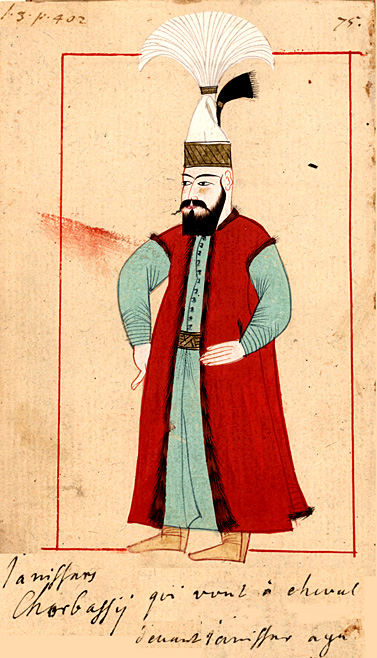
Source: Abdülkadir Özcan, “Çorbacı” (İslam Ansiklopedisi content, KÜRE Encyclopedia).
Kasımpaşa and the sea
The name of Kasımpaşa, where our restaurant stands, comes from the Güzelce Kasım Pasha Shipyard. In this area, which began to develop in the time of Mehmed the Conqueror, Tersane-i Âmire, the center of the Ottoman navy, was established, and in the time of Suleiman the Magnificent the office of the Grand Admiral (kaptan-ı derya) was also based here. For many years Kasımpaşa was a neighborhood where shipyard workers, soldiers and members of the navy lived.
Many things have changed along the Golden Horn today, but the neighborhood’s memory, built on the sea and on hard work, still lives on here.


Source: Burcu Alarslan Uludaş, “Değişim ve Dönüşüm Sürecinde Haliç Kuzey Kıyılarının Tarihsel Gelişimi Üzerine: Sütlüce, Hasköy ve Kasımpaşa” (On the Historical Development of the Northern Shores of the Golden Horn in the Process of Change and Transformation: Sütlüce, Hasköy and Kasımpaşa).
Scenes from old Istanbul
Street food and tradesman culture, of which soup was a part, belonged to everyday life in old Istanbul. The engravings and photographs below come from public-domain archives; they do not show soup directly, but they show the street vendors, piers and bridges of this city.


The images are marked as public domain (or CC0) on Wikimedia Commons; the link under each image leads to its credit and license details.
Soup at Deniz Lokantası
We have been cooking soup within this tradition, in Kasımpaşa, since 1999. The principle of our kitchen is “çorba yürek yağmurudur” (“soup is rain on the heart”): made with rock salt and butter, with no solid fat or margarine. Our restaurant is open 24 hours a day, 7 days a week.
You can see which soups are ready today on our Our Soups page, or ask us by calling or writing on WhatsApp.

Sources
- Mine Arlı, Hüseyin Gümüş. Türk Mutfak Kültüründe Çorbalar (Soups in Turkish Culinary Culture). Gazi University Faculty of Vocational Education.
- Burak Çıtak, Mustafa Sandıkcı. Afyonkarahisar Mutfağının Yöresel Çorbaları ve Diğer Şehirlerle Karşılaştırılması (Regional Soups of the Afyonkarahisar Cuisine and Their Comparison with Other Cities). Ankara Hacı Bayram Veli University Journal of the Faculty of Tourism, 23(2), 2020, pp. 256–270.
- Abdülkadir Özcan. Çorbacı. İslam Ansiklopedisi content, KÜRE Encyclopedia.
- Burcu Alarslan Uludaş. Değişim ve Dönüşüm Sürecinde Haliç Kuzey Kıyılarının Tarihsel Gelişimi Üzerine: Sütlüce, Hasköy ve Kasımpaşa.
- Images: Wikimedia Commons (public domain / CC0); credits are linked under each image.
The accounts on this page are summarized from the sources and written in our own words; they make no medical claims. If you notice a mistake, please let us know and we will correct it.